Models: Job Description
Model garments or other apparel and accessories for prospective buyers at fashion shows, private showings, or retail establishments. May pose for photos to be used in magazines or advertisements. May pose as subject for paintings, sculptures, and other types of artistic expression.
Featured schools near , edit
What Tasks Do Models Perform?
The core tasks performed by models cover:
- Pose for artists and photographers.
Key Skills and Knowledge
Successful models draw on a mix of skills and domain knowledge.
Key Skills
The competencies most important for this role, rated on an importance scale of 0 to 5:
Top Knowledge Areas
Other Models Job Titles
This career also goes by job titles like:
- Agent Model
- Art Class Model
- Art Model
- Artist's Model
- Character Impersonator
- Clothes Model
- Fashion Model
- Figure Model
Employment and Demand
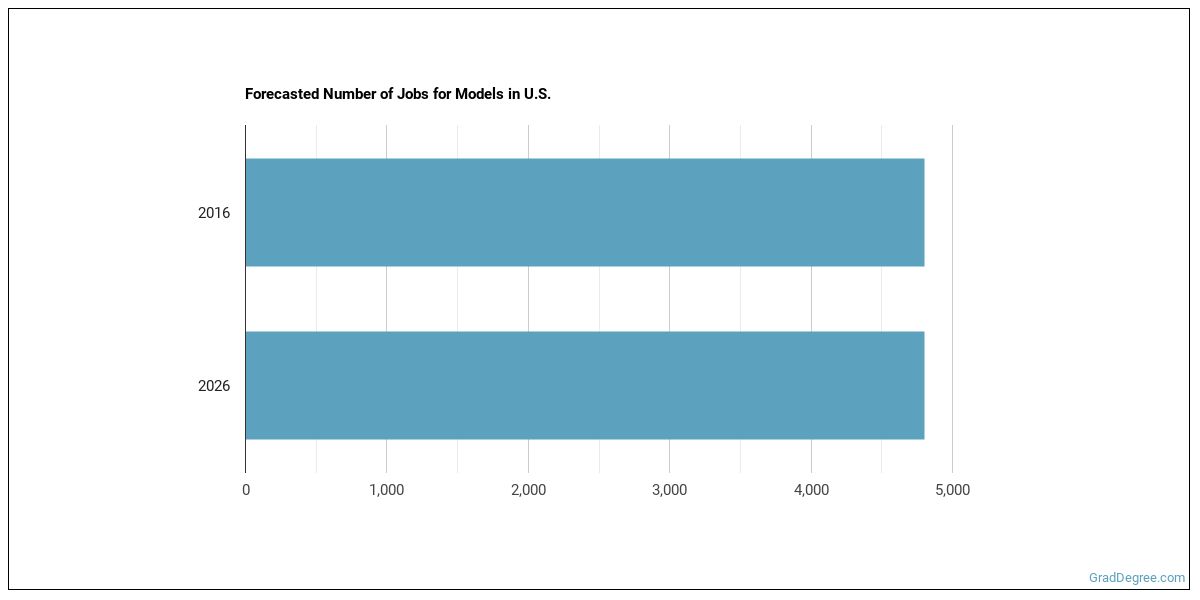
There are roughly 1,282,821 models working in the United States today. Employment is projected to grow by +5.6% over the projection horizon.
Salary for Models
| Statistic | Value |
|---|---|
| Annual median | $47,704 |
| Hourly median | $22.93 |
| 10th percentile | $33,342 |
| 25th percentile | $40,523 |
| 75th percentile | $54,885 |
| 90th percentile | $62,066 |
Pay can vary substantially based on experience, location, and industry.

How Much Do Models Make in Different U.S. States?
| State | Annual median salary |
|---|---|
| New York | $89,990 |
| California | $62,400 |
| Pennsylvania | $57,530 |
| Indiana | $51,570 |
| Alaska | $49,880 |
| Texas | $49,510 |
| Illinois | $46,960 |
| Maryland | $45,760 |
| Virginia | $44,860 |
| Florida | $44,510 |
| Ohio | $39,310 |
| New Jersey | $33,970 |
Pay by U.S. Region
Earnings for models shift depending on where you work. These regions lead on median pay:
| Region | Median annual wage | Share of U.S. jobs | Location quotient |
|---|---|---|---|
| Far Western US | $62,400 | 57.9% | 1.41 |
| Middle Atlantic | $55,176 | 9.9% | 0.52 |
| Southeast | $44,860 | 3.3% | 0.34 |
| Great Lakes | $40,266 | 26.3% | 1.62 |
Where the Jobs Cluster
| Metro area | State | Median annual wage | Employment |
|---|---|---|---|
| New York-Newark-Jersey City, NY-NJ | NY | $89,990 | |
| Los Angeles-Long Beach-Anaheim, CA | CA | $66,310 | 600 |
| Philadelphia-Camden-Wilmington, PA-NJ-DE-MD | PA | $52,140 | 80 |
| Chicago-Naperville-Elgin, IL-IN | IL | $50,760 | |
| San Jose-Sunnyvale-Santa Clara, CA | CA | $49,780 | 60 |
| Dallas-Fort Worth-Arlington, TX | TX | $49,510 | |
| Washington-Arlington-Alexandria, DC-VA-MD-WV | DC | $45,760 | 50 |
| Cleveland, OH | OH | $44,080 |
Which Industries Hire Models
The largest employers of models are found across these industries:
| Industry | Employment | Median annual wage |
|---|---|---|
| Educational Services | 1,210 | $43,310 |
| Health Care and Social Assistance | 560 | $46,870 |
| Information | 390 | $124,380 |
| Professional, Scientific, and Technical Services | 140 | $64,820 |
| Administrative and Support and Waste Management and Remediation Services | 140 | n/a |

Below are examples of industries where models work:

Tools and Technology
- Operating system software: Apple iOS (hot technology)
- Internet browser software: Apple Safari (hot technology)
- Web page creation and editing software: Facebook (hot technology)
- Spreadsheet software: Microsoft Excel (hot technology)
- Office suite software: Microsoft Office software (hot technology)
- Presentation software: Microsoft PowerPoint (hot technology)
- Word processing software: Microsoft Word (hot technology)
What the Workplace Is Like
The on-the-job environment of models tends to involve the following characteristics:
- Indoors, Environmentally Controlled
- Contact With Others
- Face-to-Face Discussions with Individuals and Within Teams
- Freedom to Make Decisions
Education and Training
Most models positions require a high school diploma or equivalent as the typical entry-level education. This career aligns with Some Preparation Needed (Job Zone 2), signaling the level of preparation typically expected.
Other Careers to Consider
Similar Occupations
- Art Directors (Supplemental)
- Craft Artists (Primary-Short)
- Fine Artists, Including Painters, Sculptors, and Illustrators (Primary-Short)
- Special Effects Artists and Animators (Supplemental)
- Fashion Designers (Primary-Long)
- Graphic Designers (Supplemental)
- Merchandise Displayers and Window Trimmers (Supplemental)
- Set and Exhibit Designers (Supplemental)
Where to Study
Future models often complete programs in:
Business, Management, Marketing, and Related Support Services
1 programs across 1 majors
About the Data
This profile draws on the following authoritative sources:
- U.S. Bureau of Labor Statistics — Occupational Employment and Wage Statistics (OEWS) for employment and wage data by state and industry.
- BLS Employment Projections for total employment and growth forecasts.
- O*NET (Occupational Information Network) for skills, knowledge, tasks, work activities, work context, technology, and education-zone data.
SOC code: 41-9012.00 (Models).

GradDegree.com provides higher-education, college and university, degree, program, career, salary, and other helpful information to students, faculty, institutions, and other internet audiences. Presented information and data are subject to change. Inclusion on this website does not imply or represent a direct relationship with the company, school, or brand. Information, though believed correct at time of publication, may not be correct, and no warranty is provided. Contact the schools to verify any information before relying on it. Financial aid may be available for those who qualify. The displayed options may include sponsored or recommended results, not necessarily based on your preferences.
© GradDegree.com – All Rights Reserved.