Life As an Insurance Adjuster, Examiner, or Investigator
Insurance Adjuster, Examiner, or Investigator Example Investigate, analyze, and determine the extent of insurance company’s liability concerning personal, casualty, or property loss or damages, and attempt to effect settlement with claimants. Correspond with or interview medical specialists, agents, witnesses, or claimants to compile information. Calculate benefit payments and approve payment of claims within a certain monetary limit.
List of Insurance Adjuster, Examiner, or Investigator Job Duties
- Communicate with former associates to verify employment record and to obtain background information regarding persons or businesses applying for credit.
- Refer questionable claims to investigator or claims adjuster for investigation or settlement.
- Investigate and assess damage to property and create or review property damage estimates.
- Analyze information gathered by investigation and report findings and recommendations.
- Examine claims forms and other records to determine insurance coverage.
- Prepare report of findings of investigation.
Featured schools near , edit
Skills Needed to be an Insurance Adjuster, Examiner, or Investigator
When polled, Insurance Adjusters, Examiners, and Investigators say the following skills are most frequently used in their jobs:
Critical Thinking: Using logic and reasoning to identify the strengths and weaknesses of alternative solutions, conclusions or approaches to problems.
Active Listening: Giving full attention to what other people are saying, taking time to understand the points being made, asking questions as appropriate, and not interrupting at inappropriate times.
Reading Comprehension: Understanding written sentences and paragraphs in work related documents.
Speaking: Talking to others to convey information effectively.
Negotiation: Bringing others together and trying to reconcile differences.
Writing: Communicating effectively in writing as appropriate for the needs of the audience.
Types of Insurance Adjuster, Examiner, or Investigator Jobs
- Compensation Adjuster
- Job Estimator
- General Adjuster
- Material Damage Adjuster
- Insurance Fraud Investigator
Insurance Adjuster, Examiner, or Investigator Job Outlook
In the United States, there were 311,100 jobs for Insurance Adjuster, Examiner, or Investigator in 2016. There is little to no growth in job opportunities for Insurance Adjuster, Examiner, or Investigator. Due to new job openings and attrition, there will be an average of 24,500 job openings in this field each year.

The states with the most job growth for Insurance Adjuster, Examiner, or Investigator are Utah, Arizona, and Colorado. Watch out if you plan on working in Maine, District of Columbia, or Mississippi. These states have the worst job growth for this type of profession.
Do Insurance Adjusters, Examiners, and Investigators Make A Lot Of Money?
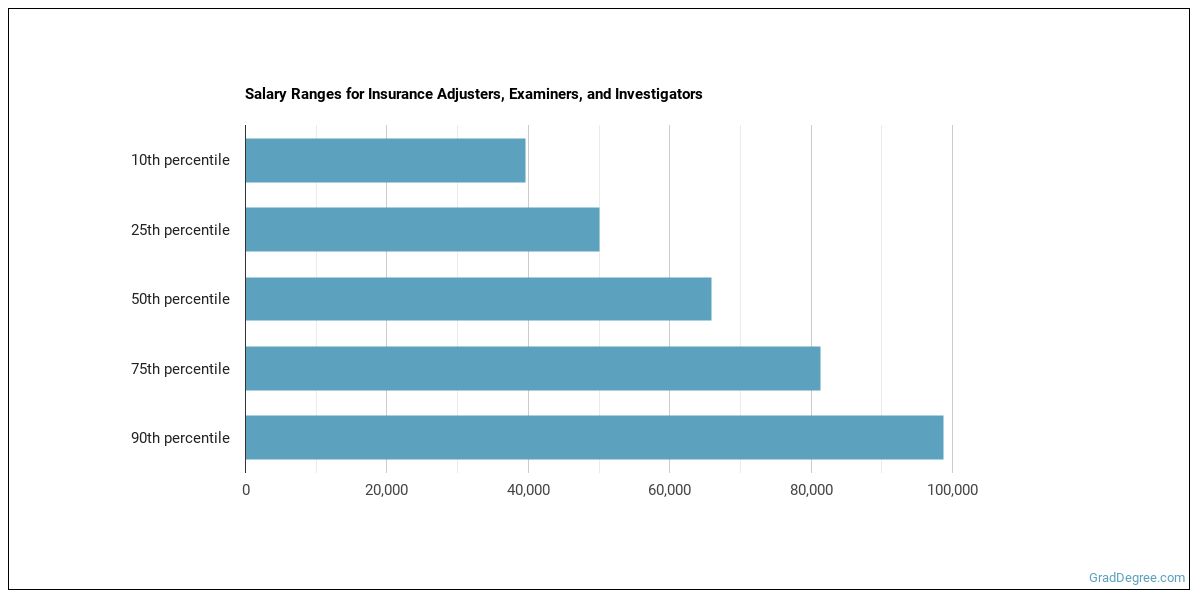
The typical yearly salary for Insurance Adjusters, Examiners, and Investigators is somewhere between $39,620 and $98,660.
Insurance Adjusters, Examiners, and Investigators who work in Connecticut, Massachusetts, or New Jersey, make the highest salaries.
Below is a list of the median annual salaries for Insurance Adjusters, Examiners, and Investigators in different U.S. states.
| State | Annual Mean Salary |
|---|---|
| Alabama | $65,060 |
| Alaska | $73,370 |
| Arizona | $67,340 |
| Arkansas | $61,930 |
| California | $71,720 |
| Colorado | $72,460 |
| Connecticut | $78,590 |
| Delaware | $63,440 |
| District of Columbia | $74,210 |
| Florida | $62,840 |
| Georgia | $65,430 |
| Hawaii | $62,860 |
| Idaho | $63,020 |
| Illinois | $65,980 |
| Indiana | $63,480 |
| Iowa | $62,750 |
| Kansas | $67,570 |
| Kentucky | $55,820 |
| Louisiana | $66,440 |
| Maine | $60,980 |
| Maryland | $72,050 |
| Massachusetts | $76,150 |
| Michigan | $67,860 |
| Minnesota | $65,760 |
| Mississippi | $62,700 |
| Missouri | $66,340 |
| Montana | $55,970 |
| Nebraska | $61,050 |
| Nevada | $65,510 |
| New Hampshire | $71,190 |
| New Jersey | $74,260 |
| New Mexico | $63,890 |
| New York | $71,950 |
| North Carolina | $62,580 |
| North Dakota | $58,580 |
| Ohio | $65,890 |
| Oklahoma | $61,670 |
| Oregon | $67,750 |
| Pennsylvania | $67,730 |
| Rhode Island | $71,950 |
| South Carolina | $62,950 |
| South Dakota | $61,490 |
| Tennessee | $60,550 |
| Texas | $69,560 |
| Utah | $59,330 |
| Vermont | $66,240 |
| Virginia | $63,640 |
| Washington | $72,340 |
| West Virginia | $57,030 |
| Wisconsin | $63,420 |
| Wyoming | $65,300 |
What Tools & Technology do Insurance Adjusters, Examiners, and Investigators Use?
Below is a list of the types of tools and technologies that Insurance Adjusters, Examiners, and Investigators may use on a daily basis:
- Microsoft Excel
- Microsoft Word
- Microsoft Office
- Medical procedure coding software
- Healthcare common procedure coding system HCPCS
- Document management system software
- CGI-AMS BureauLink Enterprise
- Hyland OnBase Enterprise Content Management
- Axonwave Fraud and Abuse Management System
- ISO NetMap for Claims
- LexisNexis RiskWise
- StrataCare StrataWare eReview
- ISO ClaimSearch
- ADP software
- CCC Pathways Appraisal Quality Solution
- IBM Fraud and Abuse Management System
- Hummingbird Legal Bill Review
- Agency Management Systems AMS 360
- Automatic Data Processing Autosource
- Automatic Data Processing Claims Manager & Dispatch
Becoming an Insurance Adjuster, Examiner, or Investigator
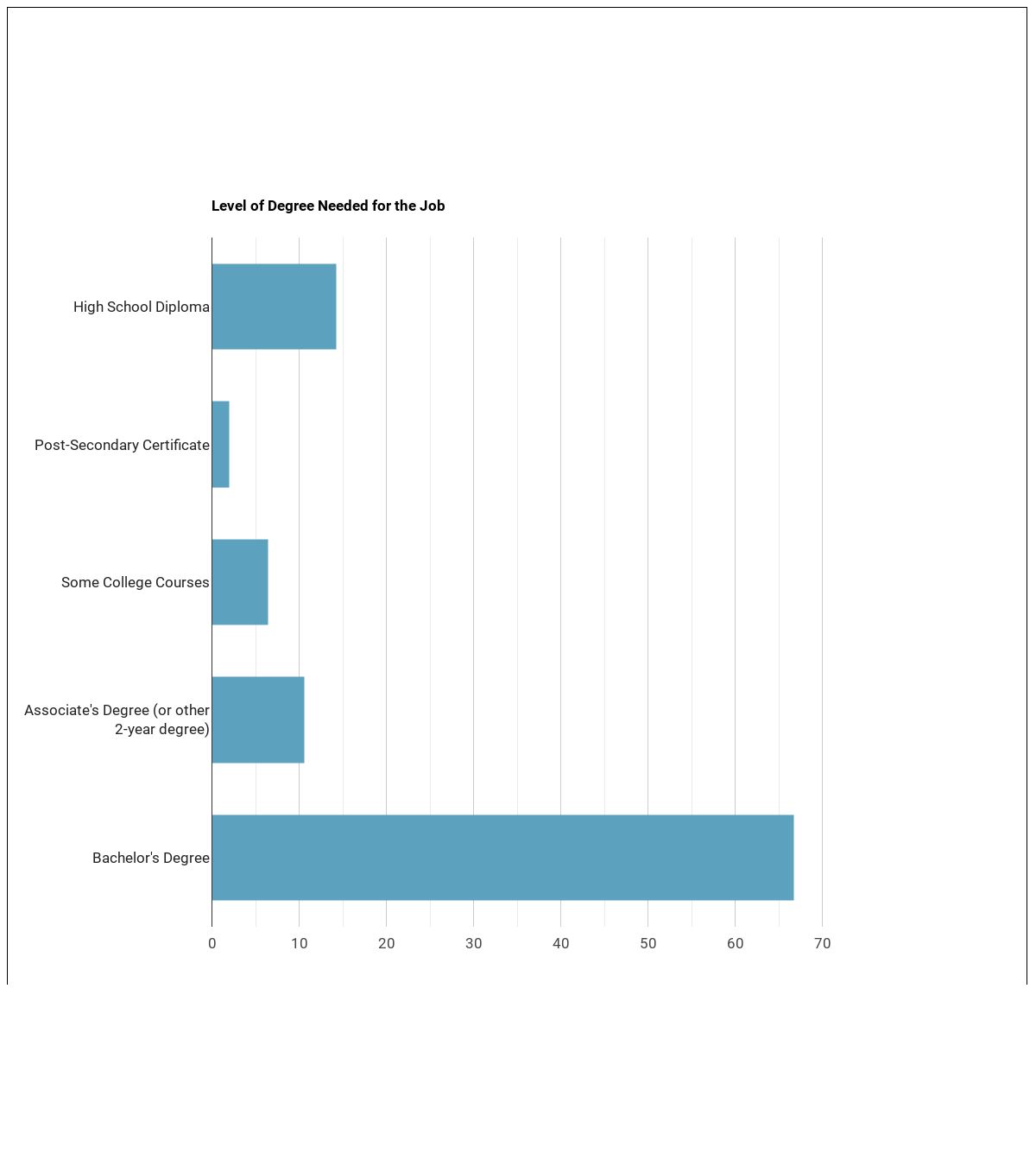
What education is needed to be an Insurance Adjuster, Examiner, or Investigator?
How many years of work experience do I need?

Where Insurance Adjusters, Examiners, and Investigators Are Employed

Insurance Adjusters, Examiners, and Investigators work in the following industries:

Similar Careers
Those interested in being an Insurance Adjuster, Examiner, or Investigator may also be interested in:
Career changers with experience as an Insurance Adjuster, Examiner, or Investigator sometimes find work in one of the following fields:
References:
Image Credit: Nick Youngson via Creative Commons 3 - CC BY-SA 3.0
More about our data sources and methodologies.
Featured Schools

GradDegree.com provides higher-education, college and university, degree, program, career, salary, and other helpful information to students, faculty, institutions, and other internet audiences. Presented information and data are subject to change. Inclusion on this website does not imply or represent a direct relationship with the company, school, or brand. Information, though believed correct at time of publication, may not be correct, and no warranty is provided. Contact the schools to verify any information before relying on it. Financial aid may be available for those who qualify. The displayed options may include sponsored or recommended results, not necessarily based on your preferences.
© GradDegree.com – All Rights Reserved.