All About Agricultural Engineers
Career Description Apply knowledge of engineering technology and biological science to agricultural problems concerned with power and machinery, electrification, structures, soil and water conservation, and processing of agricultural products.
A Day in the Life of an Agricultural Engineer
- Meet with clients, such as district or regional councils, farmers, and developers, to discuss their needs.
- Discuss plans with clients, contractors, consultants, and other engineers so that they can be evaluated and necessary changes made.
- Provide advice on water quality and issues related to pollution management, river control, and ground and surface water resources.
- Prepare reports, sketches, working drawings, specifications, proposals, and budgets for proposed sites or systems.
- Design and supervise environmental and land reclamation projects in agriculture and related industries.
- Test agricultural machinery and equipment to ensure adequate performance.
Featured schools near , edit
Agricultural Engineer Skills
Below is a list of the skills most Agricultural Engineers say are important on the job.
Critical Thinking: Using logic and reasoning to identify the strengths and weaknesses of alternative solutions, conclusions or approaches to problems.
Active Listening: Giving full attention to what other people are saying, taking time to understand the points being made, asking questions as appropriate, and not interrupting at inappropriate times.
Complex Problem Solving: Identifying complex problems and reviewing related information to develop and evaluate options and implement solutions.
Judgment and Decision Making: Considering the relative costs and benefits of potential actions to choose the most appropriate one.
Reading Comprehension: Understanding written sentences and paragraphs in work related documents.
Speaking: Talking to others to convey information effectively.
Other Agricultural Engineer Job Titles
- Project Engineer
- Engineer
- Permaculture Designer
- Agriculture Consultant
- Supplier Quality Engineer (SQE)
Agricultural Engineer Job Outlook
In 2016, there was an estimated number of 2,700 jobs in the United States for Agricultural Engineer. New jobs are being produced at a rate of 7.4% which is above the national average. The Bureau of Labor Statistics predicts 200 new jobs for Agricultural Engineer by 2026. The BLS estimates 200 yearly job openings in this field.

The states with the most job growth for Agricultural Engineer are North Carolina, Washington, and Alabama. Watch out if you plan on working in Wisconsin, Oregon, or Ohio. These states have the worst job growth for this type of profession.
Salary for an Agricultural Engineer
The typical yearly salary for Agricultural Engineers is somewhere between $46,500 and $116,850.

Agricultural Engineers who work in Illinois, Iowa, or Ohio, make the highest salaries.
Below is a list of the median annual salaries for Agricultural Engineers in different U.S. states.
| State | Annual Mean Salary |
|---|---|
| California | $75,350 |
| Florida | $76,100 |
| Illinois | $86,690 |
| Indiana | $78,710 |
| Iowa | $85,320 |
| Kentucky | $67,010 |
| Ohio | $83,600 |
| Pennsylvania | $77,060 |
| South Dakota | $65,650 |
What Tools & Technology do Agricultural Engineers Use?
Although they’re not necessarily needed for all jobs, the following technologies are used by many Agricultural Engineers:
- Microsoft Excel
- Microsoft Word
- Microsoft Office
- Microsoft PowerPoint
- Microsoft Outlook
- Web browser software
- Microsoft Access
- Word processing software
- Microsoft Project
- Autodesk AutoCAD
- Microsoft SharePoint
- Adobe Systems Adobe Photoshop
- SAS
- Adobe Systems Adobe InDesign
- Supervisory control and data acquisition SCADA software
- Oracle software
- Dassault Systemes SOLIDWORKS
- Enterprise resource planning ERP software
- PTC Creo Parametric
- SAP software
How do I Become an Agricultural Engineer?
What education or degrees do I need to become an Agricultural Engineer?
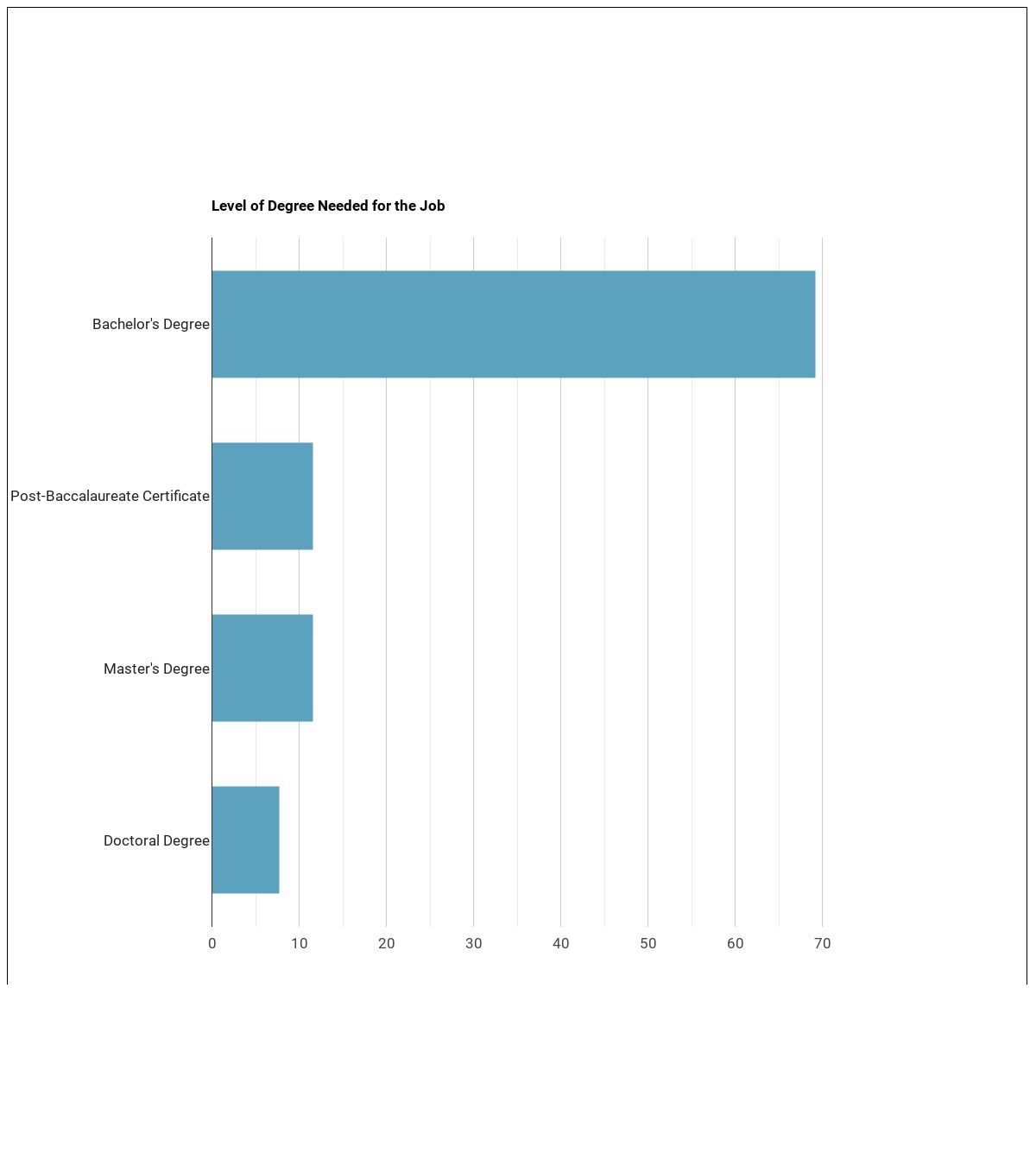
How Long Does it Take to Become an Agricultural Engineer?

Where Agricultural Engineers Work

The table below shows the approximate number of Agricultural Engineers employed by various industries.

Related Careers
Those interested in being an Agricultural Engineer may also be interested in:
References:
Image Credit: Agricultural Research Service, the research agency of the United States Department of Agriculture via Public domain
More about our data sources and methodologies.
Featured Schools

GradDegree.com provides higher-education, college and university, degree, program, career, salary, and other helpful information to students, faculty, institutions, and other internet audiences. Presented information and data are subject to change. Inclusion on this website does not imply or represent a direct relationship with the company, school, or brand. Information, though believed correct at time of publication, may not be correct, and no warranty is provided. Contact the schools to verify any information before relying on it. Financial aid may be available for those who qualify. The displayed options may include sponsored or recommended results, not necessarily based on your preferences.
© GradDegree.com – All Rights Reserved.