All About Cardiovascular Technologists and Technicians
Job Description & Duties Conduct tests on pulmonary or cardiovascular systems of patients for diagnostic purposes. May conduct or assist in electrocardiograms, cardiac catheterizations, pulmonary functions, lung capacity, and similar tests. Includes vascular technologists.
What Do Cardiovascular Technologists and Technicians Do On a Daily Basis?
- Enter factors, such as amount and quality of radiation beam, and filming sequence, into computer.
- Maintain a proper sterile field during surgical procedures.
- Inject contrast medium into patients’ blood vessels.
- Set up 24-hour Holter and event monitors, scan and interpret tapes, and report results to physicians.
- Obtain and record patient identification, medical history, or test results.
- Explain testing procedures to patients to obtain cooperation and reduce anxiety.
Featured schools near , edit
Cardiovascular Technologist or Technician Required Skills
Below is a list of the skills most Cardiovascular Technologists and Technicians say are important on the job.
Active Listening: Giving full attention to what other people are saying, taking time to understand the points being made, asking questions as appropriate, and not interrupting at inappropriate times.
Critical Thinking: Using logic and reasoning to identify the strengths and weaknesses of alternative solutions, conclusions or approaches to problems.
Monitoring: Monitoring/Assessing performance of yourself, other individuals, or organizations to make improvements or take corrective action.
Speaking: Talking to others to convey information effectively.
Operation Monitoring: Watching gauges, dials, or other indicators to make sure a machine is working properly.
Reading Comprehension: Understanding written sentences and paragraphs in work related documents.
Related Job Titles for this Occupation:
- EEG Technician (Electroencephalogram Technician)
- Laboratory Technologist (Lab Technologist)
- Cardiograph Operator
- Perfusionist
- Pulmonary Function Technologist
Job Outlook for Cardiovascular Technologists and Technicians
In 2016, there was an estimated number of 55,000 jobs in the United States for Cardiovascular Technologist or Technician. New jobs are being produced at a rate of 10% which is above the national average. The Bureau of Labor Statistics predicts 5,500 new jobs for Cardiovascular Technologist or Technician by 2026. The BLS estimates 3,500 yearly job openings in this field.

The states with the most job growth for Cardiovascular Technologist or Technician are Colorado, Utah, and Arizona. Watch out if you plan on working in Vermont, Illinois, or Connecticut. These states have the worst job growth for this type of profession.
Cardiovascular Technologist or Technician Salary
The average yearly salary of a Cardiovascular Technologist or Technician ranges between $29,340 and $93,100.
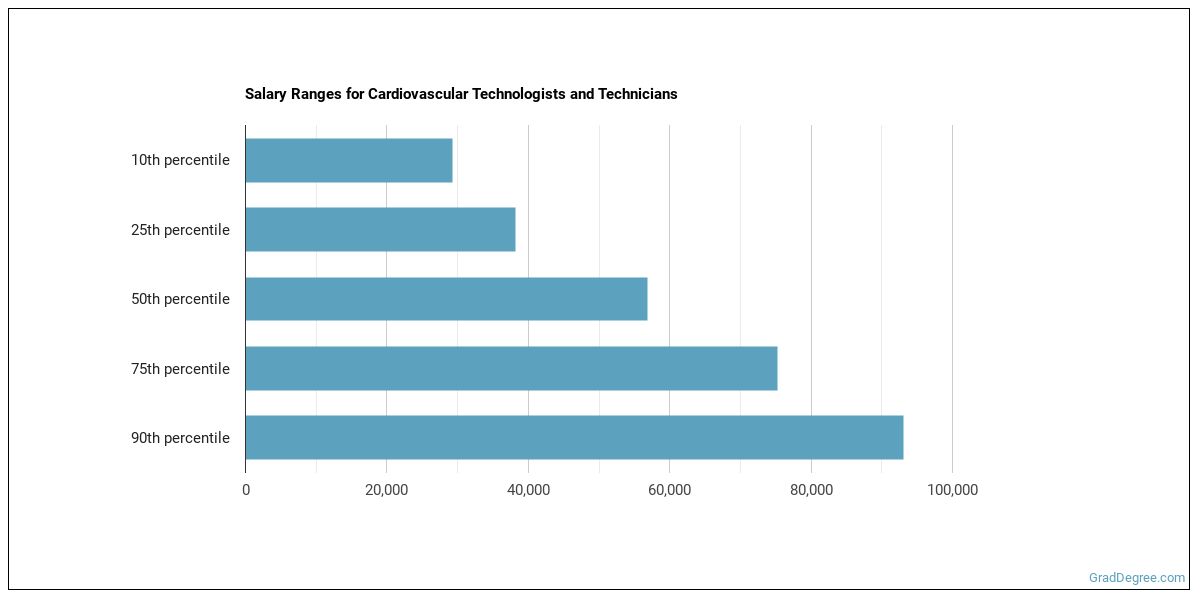
Cardiovascular Technologists and Technicians who work in District of Columbia, Oregon, or Massachusetts, make the highest salaries.
How much do Cardiovascular Technologists and Technicians make in different U.S. states?
| State | Annual Mean Salary |
|---|---|
| Alabama | $51,090 |
| Alaska | $67,160 |
| Arizona | $58,080 |
| Arkansas | $49,680 |
| California | $72,960 |
| Colorado | $69,280 |
| Connecticut | $76,800 |
| Delaware | $57,740 |
| District of Columbia | $80,840 |
| Florida | $49,340 |
| Georgia | $58,120 |
| Hawaii | $58,760 |
| Idaho | $58,020 |
| Illinois | $60,500 |
| Indiana | $53,650 |
| Iowa | $52,700 |
| Kansas | $50,740 |
| Kentucky | $49,370 |
| Louisiana | $42,320 |
| Maine | $65,610 |
| Maryland | $59,820 |
| Massachusetts | $77,520 |
| Michigan | $57,760 |
| Minnesota | $66,130 |
| Mississippi | $42,330 |
| Missouri | $50,380 |
| Montana | $63,460 |
| Nebraska | $50,360 |
| Nevada | $66,640 |
| New Hampshire | $61,110 |
| New Jersey | $75,130 |
| New Mexico | $58,610 |
| New York | $63,690 |
| North Carolina | $66,320 |
| North Dakota | $60,640 |
| Ohio | $54,620 |
| Oklahoma | $43,770 |
| Oregon | $77,680 |
| Pennsylvania | $55,520 |
| Rhode Island | $73,380 |
| South Carolina | $58,850 |
| South Dakota | $49,700 |
| Tennessee | $48,050 |
| Texas | $54,550 |
| Vermont | $52,800 |
| Virginia | $61,720 |
| Washington | $60,180 |
| West Virginia | $35,660 |
| Wisconsin | $61,190 |
| Wyoming | $54,110 |
What Tools & Technology do Cardiovascular Technologists and Technicians Use?
Although they’re not necessarily needed for all jobs, the following technologies are used by many Cardiovascular Technologists and Technicians:
- Microsoft Excel
- Microsoft Word
- Microsoft Office
- JavaScript
- Web browser software
- Word processing software
- Database software
- Hypertext preprocessor PHP
- MEDITECH software
- Electronic medical record EMR software
- Practice management software PMS
- Pyxis MedStation software
- Information systems integration software
- Diagnostic image review software
- Internet or intranet image distribution software
- Structured data entry software
How to Become a Cardiovascular Technologist or Technician
What kind of Cardiovascular Technologist or Technician requirements are there?

How many years of work experience do I need?
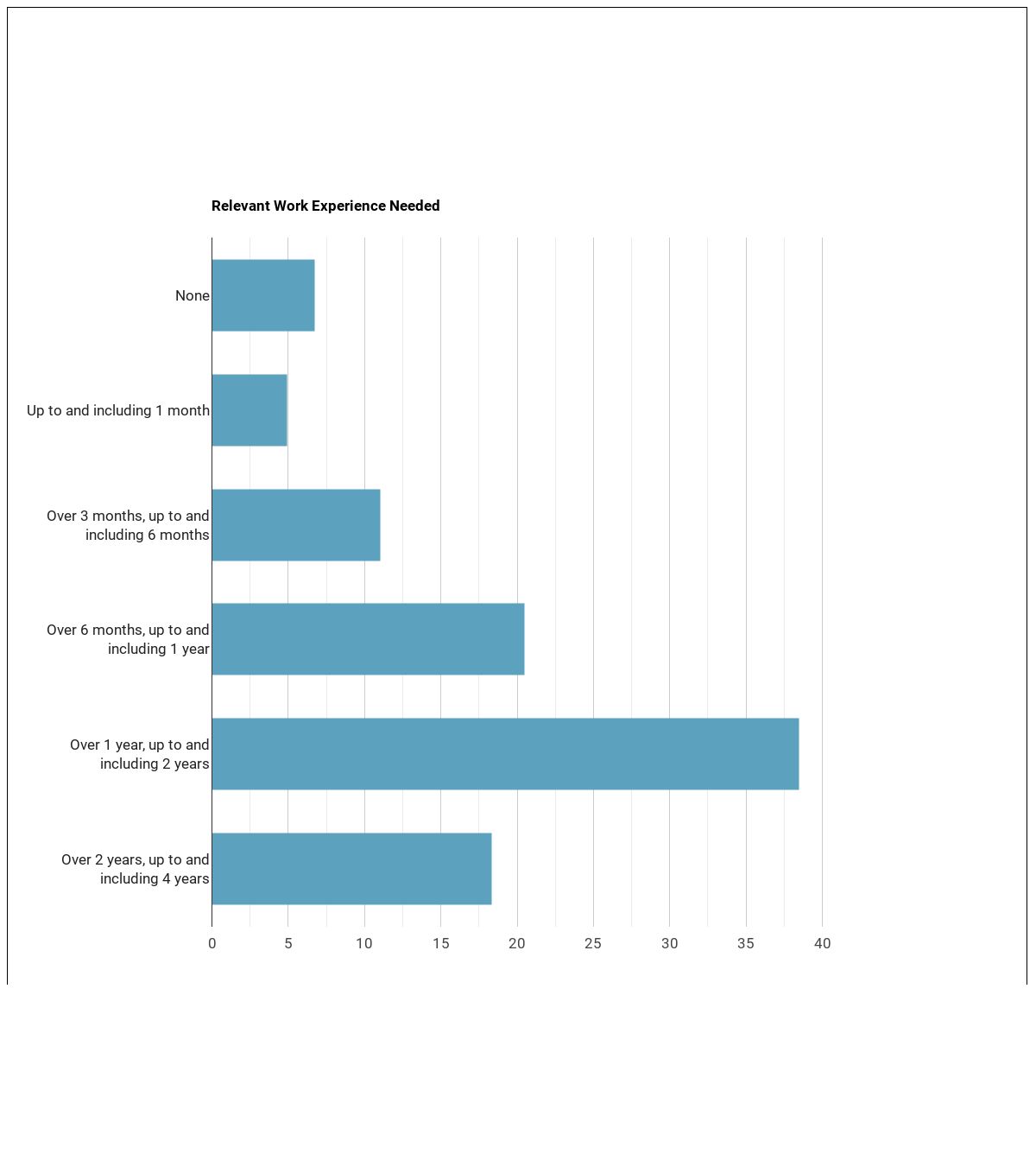
Where Cardiovascular Technologists and Technicians Work

Cardiovascular Technologists and Technicians work in the following industries:
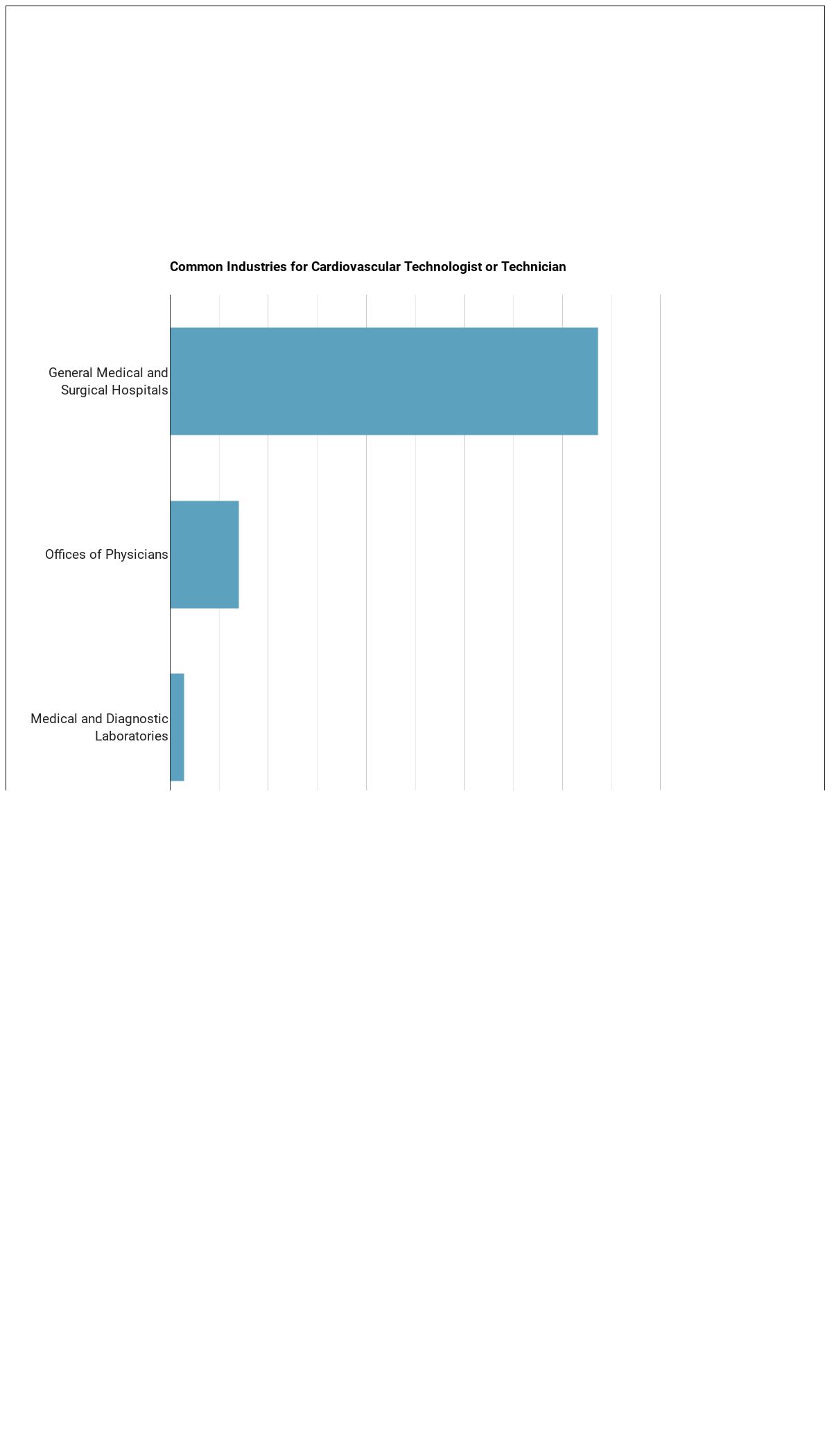
You May Also Be Interested In…
Those interested in being a Cardiovascular Technologist or Technician may also be interested in:
Career changers with experience as a Cardiovascular Technologist or Technician sometimes find work in one of the following fields:
References:
Image Credit:
More about our data sources and methodologies.
Featured Schools

GradDegree.com provides higher-education, college and university, degree, program, career, salary, and other helpful information to students, faculty, institutions, and other internet audiences. Presented information and data are subject to change. Inclusion on this website does not imply or represent a direct relationship with the company, school, or brand. Information, though believed correct at time of publication, may not be correct, and no warranty is provided. Contact the schools to verify any information before relying on it. Financial aid may be available for those who qualify. The displayed options may include sponsored or recommended results, not necessarily based on your preferences.
© GradDegree.com – All Rights Reserved.